NVIDIA Compute Acceleration Roadmap

IPS CeresAI leverages GPU computing pipelines to scale deep learning inference models. As we apply for the NVIDIA Inception program, we are outlining our infrastructure architecture to deploy H100 and L40S GPU nodes.

Proposed Computational Application

Accelerating model training cycles and edge computer vision inference speeds using NVIDIA AI Enterprise stacks.

Accelerated Training

Deploying NVIDIA H100 GPU nodes will compress our multispectral U-Net training iterations from 14 days down to 18 hours. This allows rapid model iteration cycles for our agronomists.

Real-time Segmentation

Using TensorRT, we optimize leaf disease classification models. Run-time execution on L40S servers drops leaf lesion segmentation latency below 12 milliseconds per frames feed.

Foundation Models

We plan to deploy custom Llama-3-based agricultural support models via NVIDIA NIM (NVIDIA Inference Microservices) containers, ensuring robust, scalable text and coordinate generation.

The Planned NVIDIA Tech Stack

To achieve near-instantaneous global geospatial image processing, IPS CeresAI requires structured tensor core scaling. Our engineering target relies on a combined cloud-and-edge hardware architecture:

  • NVIDIA H100 Tensor Core GPUs (Model training & large-scale embedding runs)
  • NVIDIA L40S GPUs (High-density graphic render and active spatial classification)
  • NVIDIA NIM Microservices (Production container orchestration for AI inference models)
  • TensorRT & CUDA Toolkit (Optimized model compilation and matrix math acceleration)
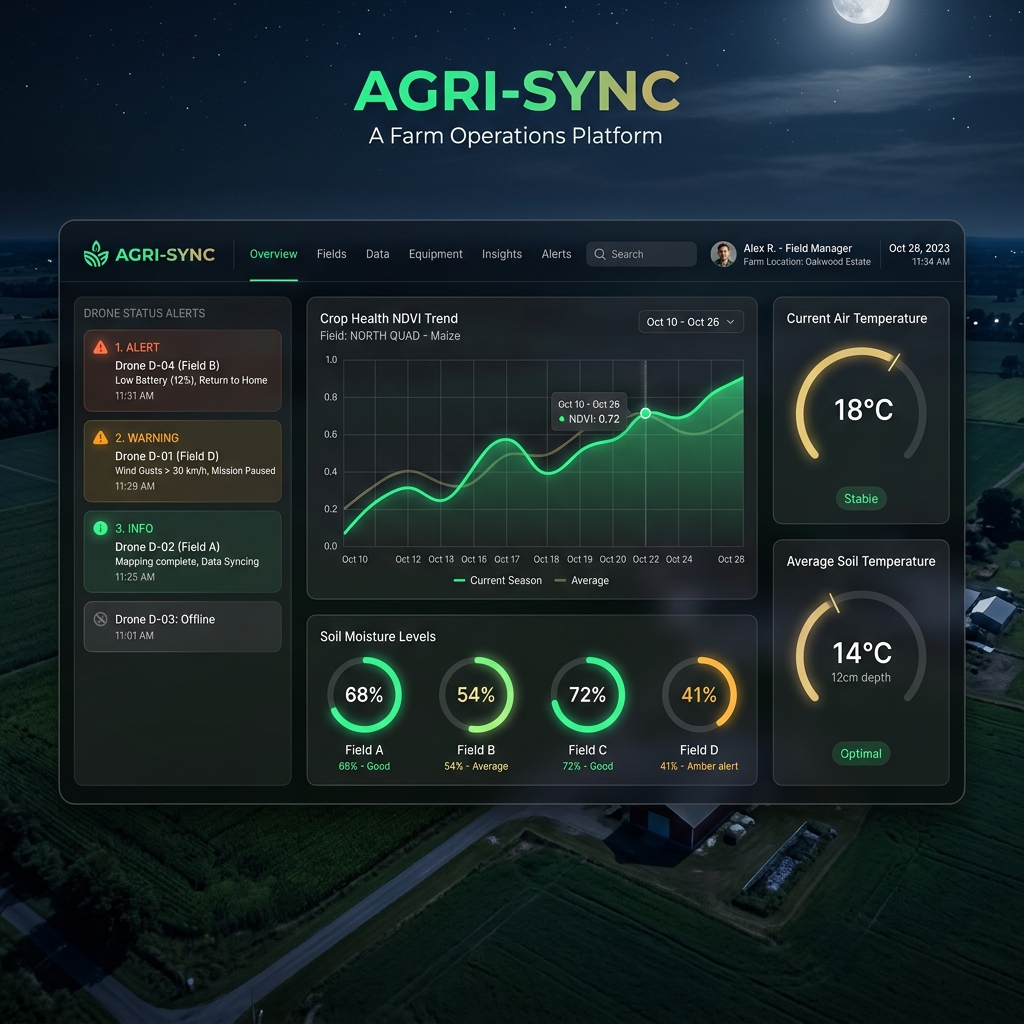
NVIDIA computing hardware acceleration simulation

Target Acceleration Milestones

Milestone 1: Model Optimization

Convert PyTorch disease segmentation weights to ONNX, compile with TensorRT to drop execution latency > 65%.

Milestone 2: Multi-Spectral Ingestion

Deploy L40S nodes on AWS/GCP clusters to stream multi-spectral Sentinel tiles concurrently across 100,000 hectares.

Milestone 3: Foundation Model Fine-Tuning

Utilize H100 nodes to fine-tune Ceres-AgriLLM on localized agricultural journals and agronomical query histories.